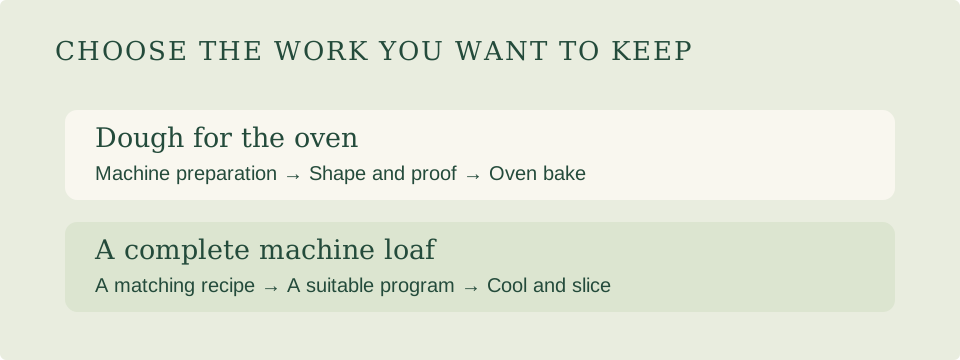
A dough cycle can take care of mixing, kneading and a scheduled rise. It leaves you responsible for the rest of the recipe, usually shaping, final proofing and oven baking.
Why choose dough-only?
You may want rolls, a pizza base, a different loaf shape or a crust your oven creates. In those cases, the bread machine is a preparation tool rather than the whole bakery. That is a useful reason to own one even if you rarely bake in its pan.
Find where the course stops
Check the manual and recipe. “Dough” and “Artisan Dough” are not interchangeable guarantees across brands. Some processes include different rests. The dough may need more fermentation after the machine stops, and a natural-starter formula may not fit the preset schedule at all.
Respect batch size
The fact that you will bake elsewhere does not remove the mixing limit. An oversized dough can strain the machine or rise beyond the pan. A very small batch may not mix as intended. Follow a dough recipe suited to the appliance, rather than calculating capacity from a finished-loaf label alone.
Choose the missing part of your workflow
If you want predictable ordinary dough, the documented dough programs are a starting point. If you need to edit fermentation stages, compare custom controls. If you want a crusty freestanding loaf, also plan shaping tools, an appropriate oven method and space for proofing.
Follow a whole recipe
Use a source that explains the machine stage and the steps afterward. The recipe library sends you to original instructions. Our guide does not replace those instructions with generic shaping times, because dough readiness varies with formula and conditions.