Japanese domestic 100 V appliance; owner/import reference, excluded from ordinary US120 V recommendations.
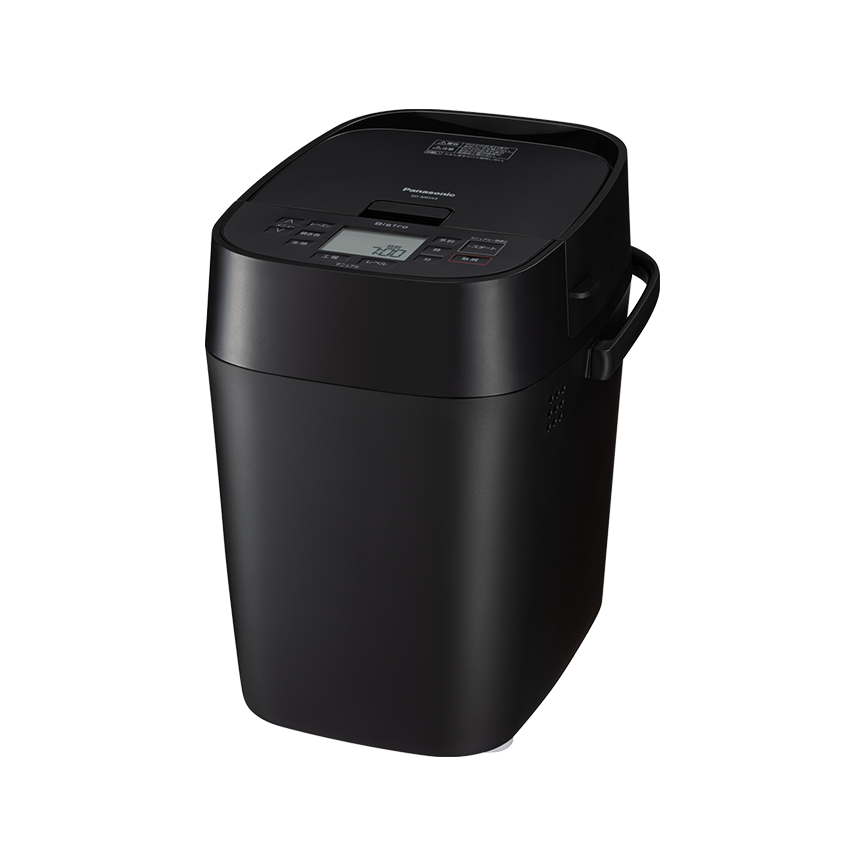 Panasonic SD-MDX4-K. Product photo: Panasonic.
THE FIT AT A GLANCE
At a glance
A Japan-compatible owner wanting independent dough stages, repeated kneading patterns and exact Japanese specialty recipes.
Japan-only 100 V; My Neri stores kneading patterns rather than complete bread cycles, and many courses cannot be reserved.
Shop this model on Amazon ↗Affiliate link · Model search.
The black SD-MDX4-K is a Japanese domestic 100 V appliance. Panasonic specifies 50/60 Hz and 430 W and says the machine cannot be used on foreign supplies with different voltage or frequency. It belongs here as an owner or import reference, not as an ordinary recommendation for a US 120 V outlet. A marketplace appearance does not establish a different electrical version, English controls, local service, or a suitable power arrangement.
Within its intended market, the distinctive buying decision concerns dough control. The SD-MDX4 combines 43 automatic menus with separate kneading, proofing, and baking tasks. Its My Neri function remembers five kneading patterns. That is more control than the SD-MT4 provides, but it does not amount to five complete user-written bread cycles. A baker choosing between the two should begin with that distinction rather than the small difference in headline menu counts.
Use the manual controls for a specific job
Panasonic allows the user to select one process, set a level and a duration, and inspect the dough's progress. The manual describes several kneading speeds, proofing levels, and baking levels. My Neri stores kneading patterns for repeated dough work; it does not join an arbitrary knead, rise, and bake sequence into one stored automatic program. The exact manual, printed pages 80–85, is the source for these controls.
This arrangement can be valuable when the baker wants a familiar kneading routine and will judge dough before moving to the next step. It is less suitable for someone expecting to design a fully unattended overnight cycle. The manual's kneading capacity is 200–300 g of flour. Treat that range and the selected task's limits as part of the workflow, not as a reason to scale every automatic recipe freely.
The SD-MT4's omission of these manual controls is consequential if this is how you intend to bake. If the plan is mostly to select automatic bread and specialty menus, its 41-menu range may cover the actual jobs without the MDX4's separate stage controls. Neither menu count tells you how much intervention a particular recipe needs.
One Japanese loaf and a dedicated smaller recipe
Panasonic describes the machine as a 1斤 type and also supplies a half-loaf menu. These labels are retained as Japanese recipe labels, with no guessed pound equivalents. Half-loaf is a dedicated course, not a universal switch that halves every program. Its recipe uses 180 g of flour, whereas the standard bread recipe uses 250 g. Simply dividing the standard ingredients in half would not reproduce Panasonic's smaller-batch recipe.
Course inputs vary elsewhere too. Early-bake and 60-minute bread use 280 g of flour; wheat-free rice-flour bread uses 300 g of a specified mix; low-sugar bread depends on its prescribed mix. The manufacturer's specification page also distinguishes early-bake at about one hour and 55 minutes, Quick Sweet at two hours and 20 minutes, and the separate one-hour bread program. Choose the intended recipe rather than treating all three as interchangeable “quick” settings.
Exact wheat-free recipe support is documented
The SD-MDX4 does have an exact-model wheat-free rice-flour recipe. Menu 21 in printed pages 42–43 of its manual uses 300 g of the specified こめの香 gluten-free mix. The recipe sets a particular shortening and ingredient balance, and warns against oil substitutions or adding dairy. It also requires a flour-scraping task at the indicated point. This is firmer evidence than a general Panasonic recipe webpage written for another machine.
The SD-MDX4 recipe book adds wheat-free chestnut/sesame and cocoa/orange variations under the same course. These are recipe instructions for this model; they do not establish that every rice flour or every gluten-free mix is interchangeable. Nor do they establish protection against cross-contact in a shared pan or kitchen. An owner changing ingredients should preserve those distinctions when deciding what the machine supports.
Automatic cases have a combined ingredient limit
The machine releases yeast and suitable additions automatically. Its raisin/nut case holds 100 g combined, not 100 g of fruit plus another 100 g of nuts. Dry ingredients need appropriate preparation. Cheese, chocolate, sticky or wet additions, and small ingredients such as sesame require the documented hand-addition method. Coarse mixing can help retain the shape of suitable additions, but it does not turn all soft ingredients into dispenser-safe contents.
This matters when the aim is unattended preparation. A dry-fruit recipe can follow the automatic case workflow, while a cheese or chocolate recipe may still require attention. The manual also excludes specified perishable additions from reserved baking. Read both the course and the ingredient rules before using the presence of two dispensers as shorthand for a hands-off loaf.
Reservation and ownership limits
Reservation reaches 13 hours for the eligible bread menus, or ten hours for bread using prepared natural-yeast starter. Rich Pan de mie, early-bake, Quick Sweet, 60-minute bread, low-sugar bread, Brioche, marble, arranged bread, and the dough and specialty tasks do not all become reservable. Page 24 gives the exact list. The natural-yeast process is its own documented recipe route and should not be treated as unrestricted wild-sourdough programming.
The body measures approximately 26.3 cm wide, 35.6 cm deep, and 35.3 cm high, at about 6.0 kg. Its pan has a fluororesin coating, and dishwasher washing is prohibited. The manual documents automatic continuation after interruptions of ten minutes or less, with possible effects on the bread. A keep-warm duration has not been established in the inspected sources.
For an owner with appropriate Japanese power, the MDX4 earns its distinction through repeatable kneading patterns, separate process control, and a broad set of exact recipes. For an ordinary US purchase, the voltage and market restrictions decide the issue first. For automatic presets alone, compare the smaller SD-MT4's documented menus before assigning value to controls you will not use.
Documented specifications
- Model
- SD-MDX4-K
- General loaf sizes
- 1斤 / ハーフ食パン (dedicated half-loaf course)
- Dedicated GF course
- Yes
- GF capacity basis
- Exact menu 21 wheat-free rice-flour recipe uses 300 g specified GF mix for a Japanese 1斤 recipe; no pound selector.
- Automatic add-ins
- Yes
- Complete adjustable cycle
- Not confirmed
- Body dimensions
- 10.3543 × 14.0157 × 13.8976 in (W × D × H)