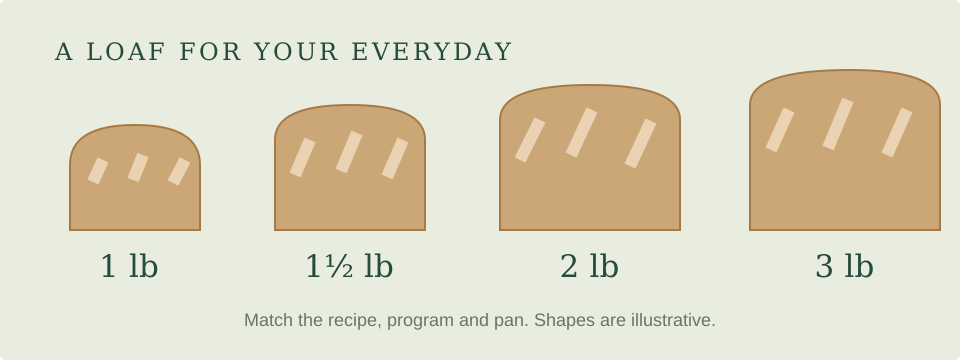
A larger bread-machine loaf can fit a small household if you plan what happens after cooling. Keep what you will use soon and freeze the portion you want later, in a form that is easy to take out.
Decide how the loaf will be used
There are two useful routines. You can make a small loaf more often, or make a larger loaf and preserve part of it. The better one depends on your schedule and whether you are happy to use frozen slices. A large pan is not automatically excessive, and a small pan is not automatically convenient if it needs to run again immediately.
Make that decision before comparing capacities. The finder asks about fresh bread and freezing because storage changes how a batch size fits the way you live.
Let the loaf cool before packing
Follow the recipe's cooling directions, using a rack where appropriate. Packing a still-warm loaf can trap moisture. It is also harder to judge crumb texture while the interior is warm. Plan cooling time as part of the bake rather than treating the end-of-cycle signal as the moment everything is ready for storage.
Freeze in the portions you will actually take out
For toast or sandwiches, slices can be more practical than one frozen whole loaf. Arrange portions so you can separate the amount you want, then use airtight wrapping or a suitable freezer container. Label the bread and date so that several similar-looking batches remain identifiable.
If you want a whole loaf for a later meal, plan the thawing and serving method around that format. The choice is about convenience: a frozen loaf that is awkward to portion may discourage you from using the bread you intended to save.
Judge the capacity by a real week
After a few bakes, note how much bread you eat fresh and how often you return to the frozen portion. If a large fraction remains unused, choose a smaller compatible recipe or pan. If bread disappears quickly, a larger documented setting may reduce repeated setup.
Recipe type matters too. A GF recipe with a fixed documented yield can make freezing a more useful option than trying an unsupported smaller batch. The recipe and program must still agree; freezing helps you use the output, not alter the machine's capacity.
Connect storage to your next purchase
For small fresh batches, compare the Mini and Maestro. For planned larger loaves, inspect the Virtuoso Plus or Hi-Rise. If different batches suit different days, compare the supported size choices on the exact course.
Keep a short note in the baking log about which batch you actually used. That makes the next size decision more practical than relying only on a household number.